

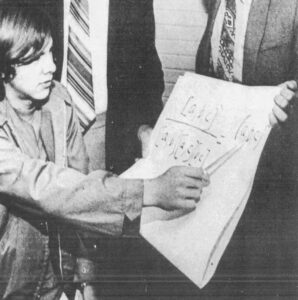
Hal Finney
Overview: A Quiet Genius and Bitcoin’s First Believer
Before Michael Saylor integrated Bitcoin into corporate treasury strategy and before Elon Musk publicly engaged with cryptocurrency, Hal Finney was already a foundational figure in the space. His story is exact opposite to a typical crypto evangelist. He never sought fortune or fame. He lived out an extraordinarily life possessing technical expertise to understand Bitcoin’s profound innovation. He had also the philosophical conviction to recognize why this innovation matters.
Hal Finney is a big face in crypto scene but unfortunately his contribution remains largely unknown outside cryptocurrency circles because he deliberately prioritizes substance over visibility. This obscurity does not undermine significance of his work anyway.
Story: From Software Pioneer to Cryptographic Visionary
The Early Formation of a Technical Mind
Hal Finney was born in 1956. It was an era when computers were so big that they occupied entire rooms and programming required intimate understanding of machine architecture. He grew up in Southern California and displayed exceptional aptitude in mathematics and engineering from childhood. Pursuing his education in computer science he developed deep expertise in software engineering, cryptography and network systems. He had the rare ability to translate mathematical concepts into functional code that solved world problems.
1980s and 1990s were era of digital revolution. It was the periods when computers were connected with internet globally. Finney was part of some of the most important cryptography and privacy related discussion that shaped the emerging digital age. He was also part of cypherpunk movement, an organized community of activists, mathematicians and programmers who were dedicated to using cryptography to protect privacy of people and resist government surveillance.
Entry into the Cypherpunk Community
At a time when governments were tightly controlling cryptographic technologies and classified strong encryption as munitions, Crypherpunks like David to Goliath advocated for widespread availability of powerful cryptographic tools. They believed that strong encryption should be available for ordinary people as it’s essential for defense against a totalitarian surveillance and government outreach.
Finney didn’t merely stand by these ideals, he actively participated in advancing them. He took part in may cryptographic discussions, and debates about digital privacy. He worked diligently on various privacy-enhancing technologies. His contributions earned respect within the community because it demonstrated his technical competence and thoughtful analysis.
In 1992, Finney got involved with PGP (Pretty Good Privacy) project. It was one of the most important cryptographic tools ever created. The tool allowed ordinary people to encrypt their communications using military-grade cryptography, which made surveillance and message interception more difficult.
Encountering Bitcoin and Recognizing Its Significance
By the early 2000s, Finney was regarded as a respected figure in cryptographic and privacy circles. He had witnessed the evolution of the internet, participated in important technical discussions, and contributed to several significant projects advancing digital privacy and security.
In late 2008, Satoshi Nakamoto, the pseudonymous creator of Bitcoin, published Bitcoin whitepaper. The theoretical framework outlined a radical solution to the problem of creating a currency system without needing a central authority to prevent double spending. Finney was among the few people who provided positive feedback when Satoshi Nakamoto posted the Bitcoin project to Cryptographic mailing list on 31 October, 2008. The collaboration between the two became more frequent after Nakamoto launched Bitcoin software in early 2009.
Early Mining and Network Development
Finney was closely involved in the early development phase of Bitcoin. He was, besides Nakamoto, the first person to mine Bitcoin successfully. His mining activity that generated blocks formed the Bitcoin’s early history. He did not mine Bitcoin for personal profit or to earn name. He took it professionally and viewed mining as an important technological and social experiment.
Finney’s participation in Bitcoin project during earliest days proved crucial. Using his decades of cryptographic and software development expertise, he tested the early Bitcoin software, gave valuable feedback to Nakamoto and assisted him resolving bugs. He helped Nakamoto in stabilizing the Bitcoin network during the early period where survival project was not guaranteed.
Philosophical Contributions and Public Advocacy
Besides his contribution to technical work of Bitcoin project, Finney well understood the philosophical significance of Bitcoin. In numerous blogs and forum posts, he lucidly explained why this new technology mattered so profoundly. He viewed Bitcoin as culmination decades of work in cryptography, digital signatures and distributed system.
Finney well understood that the Bitcoin not only solved a long pending technical problem, but also gave rise to a new economic system that could potentially disrupt people’s relation with money. For centuries monetary system required governments or banks to manage currency and prevent fraud. Bitcoin eliminated the lacunae through a brilliant technological innovation.
In November 2010, Finney made a remarkable prediction in a forum post. He envisioned a future where Bitcoin achieved massive adoption and became the main medium in commerce. He imagined Bitcoin transactions processing millions of payments daily with the currency functioning as genuine money rather than novelty technology or speculative asset. At a time when Bitcoin’s future trajectory could not be seen or predicted, Finney articulated potential that Bitcoin hold with clarity and conviction.
Diagnosis of ALS and Final Years
In 2011, Finney was diagnosed with ALS (Amyotrophic Lateral Sclerosis). ALS is also known as Lou Gehrig’s disease. It is a progressive neurodegenerative condition which slowly paralyzes its victims through motor neuron degeneration. Over the time the victim losses the ability to move, speak and breath without mechanical assistance.
The diagnosis would have crushed many people but not Finney. He continued his engagement with Bitcoin and cryptographic communities despite his deteriorating physical conditions. He was brave enough to document his experience with the disease while continuing his engagement with technology and ideas.
In December 2013, Finney made an extraordinary decision. He underwent cryonic preservation. Cryonic preservation is a technique to preserve body in extremely low temperature with the hope that future medicine might revive or heal the patient. Having lived for 3 years with ALS, Finney breathed his last on August, 28, 2014 at the age of 58.
Philosophy and Vision: The Cypherpunk’s Dream Realized
Bitcoin as Cryptographic Liberation
Hal Finney viewed Bitcoin as culmination of decades of cypherpunk ideals regarding privacy, freedom and individual autonomy in an increasingly digital world. As per him Bitcoin is the result of cryptography moving from abstract realm of mathematics into a concrete and functional reality that people can use.
The cypherpunk movement, in which Fineey was part of, held that if strong cryptography is available widely for people to use, can act as defense against tyranny and surveillance. Historically, governments across world consolidated their hold on monetary system and communication infrastructure as they serve as foundation for control and power. So, the aim of cpyerphunk movement was to democratize cryptographic tools and monetary system to redistribute power away from governments back to people.
Bitcoin realized this vision in a way that previous cryptographic innovations, while important, had not fully accomplished. PGP and similar tools enabled people to encrypt their communications, but governments-maintained control over money creation and monetary systems. Bitcoin made it possible for individuals to control their own monetary destiny without requiring permission or participation from any centralized authority.
The Philosophical Problem Bitcoin Solves
Finney had well-articulated the fundamental problem that Bitcoin solved. Before Bitcoin and throughout the history monetary systems were based on trust of people on central authorities like Banks. People accepted government backed currency because they believed government would maintain the value of currency. They trusted banks because they believed that the institution would maintain adequate reserves and return their fund on demand.
The trust-based model, however, contains inherent vulnerabilities. Governments can abuse their authority in various ways. For example, they can print more money thereby increasing the supply and circulation which erodes value of the money and affect saving of people. There is also possibility of banks might use the deposits for risky landing or outright fraud, which can jeopardize people’s money.
Bitcoin solved this problem through technological innovation which based on mathematical certainty rather than institutional trust. Bitcoin’s supply is limited. Its quantity can’t be increased. There will be only 21 million Bitcoins, guaranteeing scarcity that saves savers from inflation. The network’s security based on trustless system and cryptographic proofs rather than institutional promises. Transactions are based on distributed consensus where miners confirm the accuracy of transaction.
Finney recognized early that Bitcoin as fundamentally revolutionary. He understood that Bitcoin is not just to be going to be an alternative currency but can potentially replace institutional trust with a trustless system. He felt that human reason and self-interest would drive adoption of better monetary systems once they became technically feasible.
Decentralization as Freedom
A consistent theme throughout Finney’s writings and participation involved decentralization as an essential component of freedom. He believed that centralized control of important systems—whether monetary, communicative, or informational—inevitably leads to abuse and oppression. Only through decentralized systems, where power could not be concentrated in any single authority, could genuine freedom be maintained.
Bitcoin’s decentralized architecture embodied this philosophy perfectly. No single entity-controlled Bitcoin. No authority could shut it down. No government could prevent its use. The network operated according to mathematical rules that no individual or institution could arbitrarily alter. This represented decentralization not as an abstract ideal but as functional reality. `
The Vision of Money Without Government
In Bitcoin discussions, Finney spoke about his vision of money functioning without government control or participation. He didn’t advocate for violent revolution. Rather, he believed that technology made government-controlled money increasingly obsolete. If people could exchange value through peer-to-peer networks using cryptographic proofs, the role of government in monetary systems would naturally diminish.
Finney believed that as people experienced the benefits of government-free money—no inflation from excessive printing, no counterparty risk from banking system failures, no surveillance of transactions—they would increasingly prefer Bitcoin to government currency. This preference would occur not through coercion but through voluntary adoption by people recognizing Bitcoin’s superior characteristics.
His Contributions: Cryptography Meets Economics
Technical Contributions to Bitcoin’s Foundation
Finney’s most direct contribution involved his technical participation during Bitcoin’s earliest and most vulnerable period. Bitcoin, in its early years, required extensive testing to verify functionality, design flaws, security vulnerabilities and bugs that might have made the entire system non-functional or flawed. This was where Finney stepped in.
Finney painstakingly tested the protocol, identified technical issues and even took part in mining activity when there were only handful of miners. Finney’s involvement proved essential for establishing credibility of Bitcoin. He had was from a strong cryptography and software development. His experience and expertise helped him to evaluate Bitcoin’s security properties with rigor that only few could match.
Finney’s involvement in the Bitcoin project attested Bitcoin’s technical foundation before the world. A renowned cryptographer like Finney with decades of experience in security system vouching for Bitcoin’s design carried weight far greater than what Nakamoto’s anonymous promotion could achieve. Finney’s public endorsement of Bitcoin convinced technically sophisticated people that the project merited serious engagement.
Conceptual Contributions: Linking Cryptography to Economics
While Bitcoin’s technical innovations were primarily Nakamoto’s work, Finney made important conceptual contributions linking cryptographic concepts to economic principles. He explained to the world why the cryptographic properties embedded in Bitcoin’s design created a monetary system characterized by scarcity, security and immutability.
People with technical understood Bitcoin’s cryptographic foundations but not many had the foresight to see Bitcoin as a monetary system itself. Finney helped bridging this gap by explaining to technically-oriented audiences about Bitcoin’s economic properties.
Advocacy for Privacy and Decentralization
Throughout his illustrious career, Finney consistently advocated for privacy-enhancing technologies and decentralized systems. His participation in the cypherpunk movement, his work on PGP, and his advocacy for Bitcoin are testament to his commitment towards using cryptographic tools to preserve freedom. His deep involvement in the Bitcoin project lend credibility and helped legitimize work that mainstream institutions often dismiss or oppose.
Historical Documentation
In his final years, Finney started documenting Bitcoin’s early history and his personal experience with the technology. He recorded his memories of early interactions with Nakamoto. He also discussed his understanding of Bitcoin’s design, and spoke about his vision of Bitcoin’s potential. This historical documentation proved invaluable. It provided an insider perspective on Bitcoin’s creation and early development from someone with the technical expertise to understand the innovations clearly.
He articulated that in the long term, Bitcoin’s success will depend not on the actions of influential personalities, but on its ability to address fundamental challenges and fulfill its promise as a decentralized, resilient financial system. Musk’s contributions, while impactful, are just one chapter in Bitcoin’s ongoing story. Bitcoins from Nakamoto, which became the first every Bitcoin transaction in history.
Impact: Shaping Cryptocurrency’s Trajectory and Philosophy
Legitimizing Bitcoin Through Technical Credibility
Finney’s most immediate impact involved lending technical credibility to Bitcoin during a period when mainstream institutions dismissed cryptocurrency as a foolish experiment or outright scam. For someone unfamiliar with cryptography, evaluating Bitcoin’s technical merits posed significant challenges. Finney’s clear articulation of why Bitcoin’s design was sound helped convince other technically experienced people that the project deserved serious consideration.
This credibility proved crucial during Bitcoin’s vulnerable early years. Projects lacking clear advantages often fail regardless of technical merit simply because they cannot generate sufficient momentum and developer engagement. Bitcoin’s survival during this period depended partly on attracting sufficient technical talent to identify and address bugs and design issues. Finney’s endorsement likely contributed to attracting technical developers who might otherwise have dismissed Bitcoin as unworthy of their time.
Connecting Cypherpunk Philosophy to Practical Cryptocurrency
Finney played an important role in connecting decades of cypherpunk philosophy to cryptocurrency’s practical realization. The cypherpunk movement had long articulated ideals regarding privacy, individual freedom, and resistance to centralized surveillance. However, these ideals had previously manifested in tools—encryption software, anonymous communication systems—that were valuable but remained somewhat marginal to mainstream economic activity.
Bitcoin was different. It offered something people actually needed: a way to exchange value. By positioning Bitcoin within the cypherpunk tradition, Finney helped people understand that cryptocurrency represented not merely an interesting technical achievement but rather the fulfillment of decades of work in privacy technology and decentralized systems.
Establishing Bitcoin’s Economic Philosophy
Beyond technical discussions, Finney contributed significantly to establishing Bitcoin’s economic philosophy. His writings about Bitcoin’s properties as money, its relationship to monetary systems, and its potential to reduce dependence on government currency helped frame Bitcoin not as a speculative investment but as a revolutionary medium of money exchange.
Finney’s breakdown of economic philosophy of Bitcoin proved important for Bitcoin’s future. His ideas never gave credence to Bitcoin as a speculative asset or a way to get rich quickly. He connected Bitcoin’s philosophical foundation with cyperpunk ideals which attracted people motivated by genuine belief in the technology’s importance.
Influencing Cryptocurrency Culture and Values
Finney’s example of engaging with Bitcoin and cryptographic technology from philosophical rather than purely financial motivations influenced cryptocurrency culture broadly. His quiet, intellectually rigorous approach contrasted sharply with the hype, speculation, and get-rich-quick mentality that increasingly characterized parts of the cryptocurrency space.
By exemplifying thoughtful engagement with cryptocurrency grounded in principles rather than greed, Finney helped establish cultural values within parts of the cryptocurrency community. Not everyone followed his example, but his influence provided a counterweight to purely profit-driven engagement with cryptocurrency.
Cultural Impact: Privacy as a Right
Finney’s consistent advocacy for privacy and his participation in movements defending privacy rights contributed to broader cultural conversations about surveillance, government power, and individual freedom. While Finney never received mainstream media attention comparable to other technological figures, his work and philosophy influenced technology advocates, policy discussions, and cultural attitudes regarding privacy.
His life demonstrated that intelligent, principled people could view privacy not as something illicit or suspicious but as a fundamental human right deserving protection and advocacy. This perspective gradually gained broader acceptance, with privacy increasingly recognized as a legitimate concern even in mainstream discourse.
Conclusion: The Unsung Architect of Cryptocurrency’s Philosophy
Hal Finney occupies a peculiar position in cryptocurrency history: profoundly important yet largely unknown outside specialized communities. While other figures dominate headlines and business journalism—entrepreneurs who became wealthy through cryptocurrency, technologists who founded blockchain projects, investors who bet fortunes on digital assets—Finney worked quietly, driven by principles rather than profit, motivated by the belief that technology could advance human freedom.
Finney’s most direct contribution to Bitcoin was when he tested early Bitcoin software and ran a node during Bitcoin’s most vulnerable period. Bitcoin in early days lacked trust because its creator Satoshi Nakamoto was an anonymous person but Finney vouched for the soundness of Bitcoin software that played a crucial role in legitimizing Bitcoin in front of cryptographic community. Without Finney’s innovation, the trajectory of Bitcoin might not have been same today.